Paradise Valley Artificial Turf Pros
Desert-Adapted Turf Installs in Paradise Valley, AZ
Desert-adapted turf installs in Paradise Valley, AZ with heat-rated fiber and cooling infill. Free estimates.
- 15+ Years local experience
- 500+ Projects completed
- Licensed & Insured
Serving Paradise Valley and nearby communities.
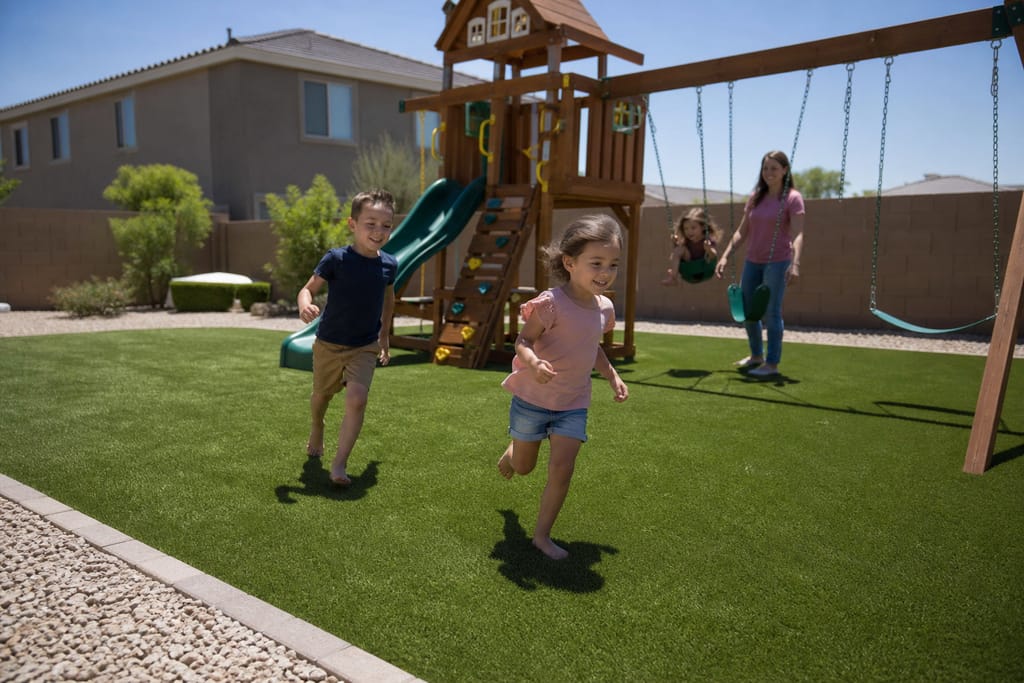
Paradise Valley's open estate lots sit in full sun most of the day, and standard turf can get hot enough to burn bare feet by mid-afternoon in summer. Paradise Valley Artificial Turf Pros builds desert-adapted installs with heat-rated fiber and cooling infill options engineered for exactly that problem.
This isn't a different install method so much as a different materials spec. The base compaction and seaming stay the same, the fiber and infill selection change to manage surface temperature.
What's included
What's Included with Desert-Adapted Turf Installs
- Typically included — heat-rated turf fiber selection, reflective base prep, standard or cooling infill option, shade-zone placement planning.
- Optional — full cooling infill upgrade across the whole yard, partial shade-zone standard infill to balance cost.
- Customer prep — note which areas of the yard get the most direct afternoon sun so material choice can be matched to each zone.
Want a clearer scope?
Get a Free EstimateHow it works
How Our Desert-Adapted Turf Installs Process Works
 Step 1
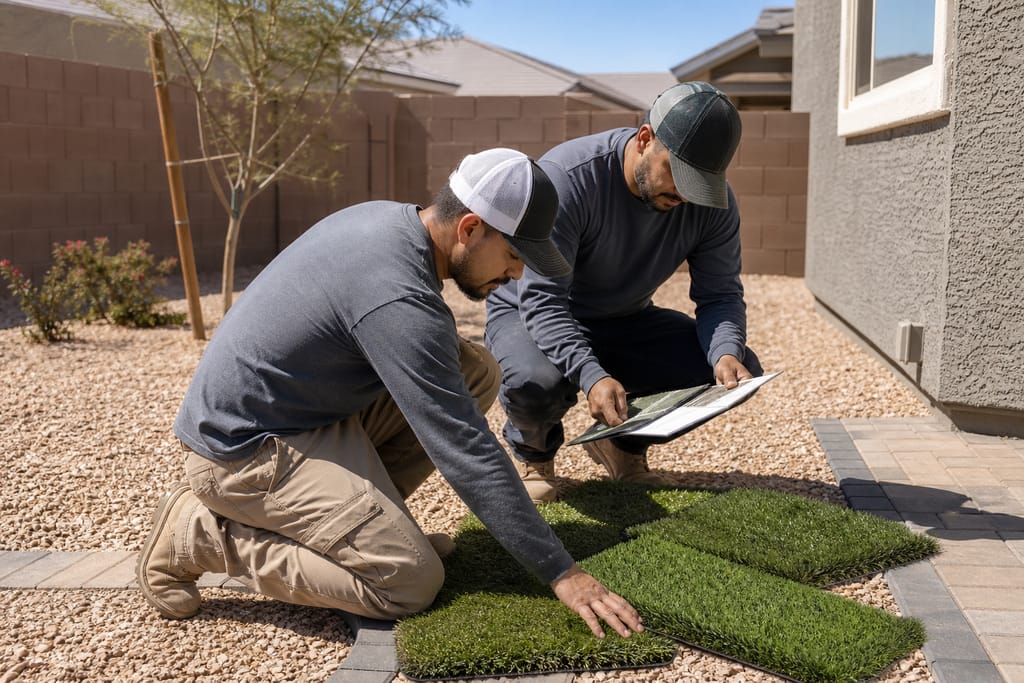
Heat tolerance planning
Turf products get selected based on resistance to the kind of sun exposure Paradise Valley estate lots see.
 Step 2
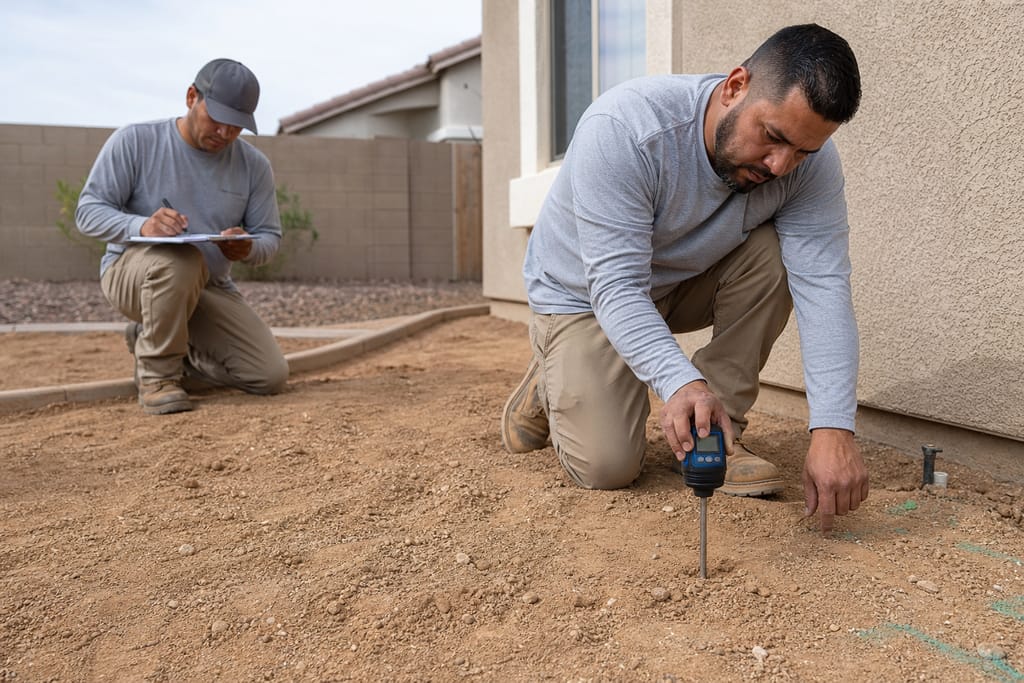
Soil moisture testing
Existing soil gets tested to plan drainage around the heat-managed base.
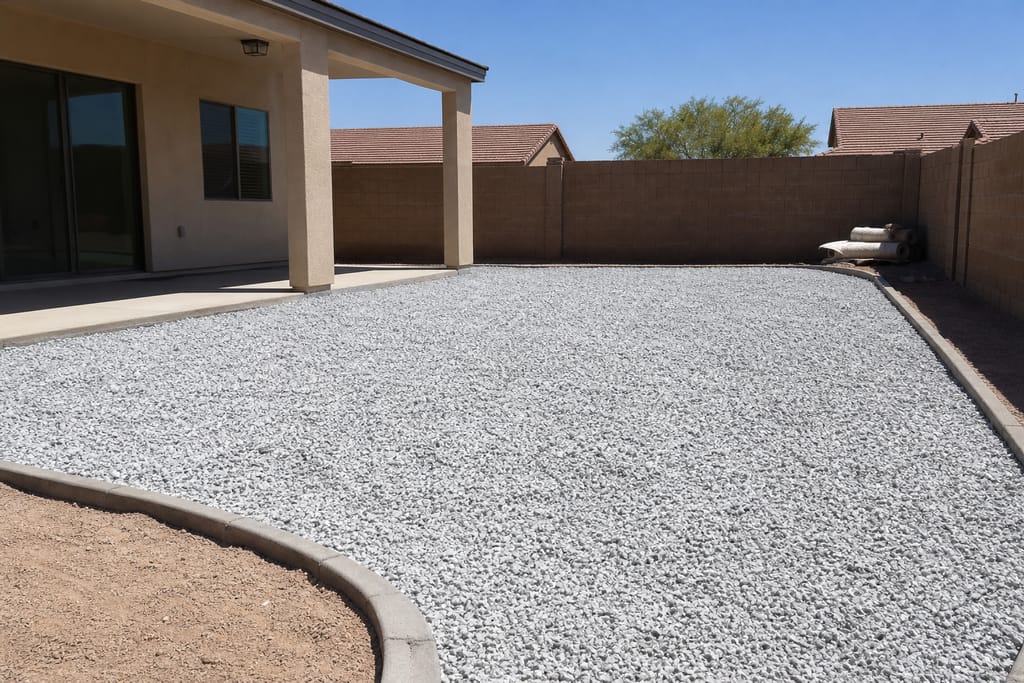 Step 3
Reflective base prep
Base materials chosen to reduce heat buildup beneath the surface.
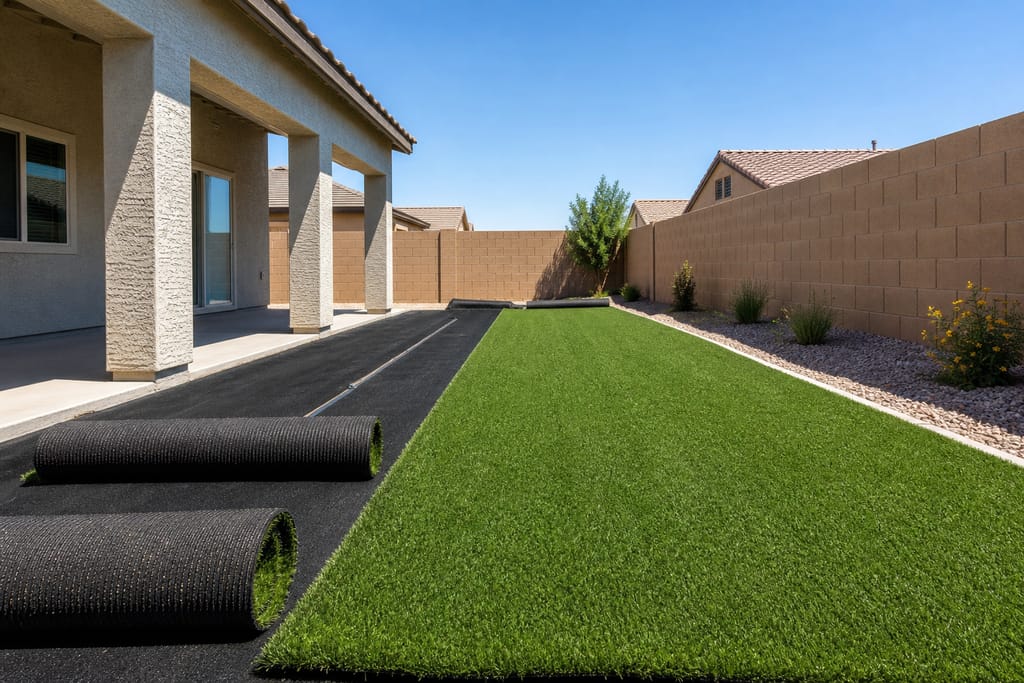 Step 4
Heat-resistant turf laying
Specialized fiber goes down built to handle sustained high temperatures.
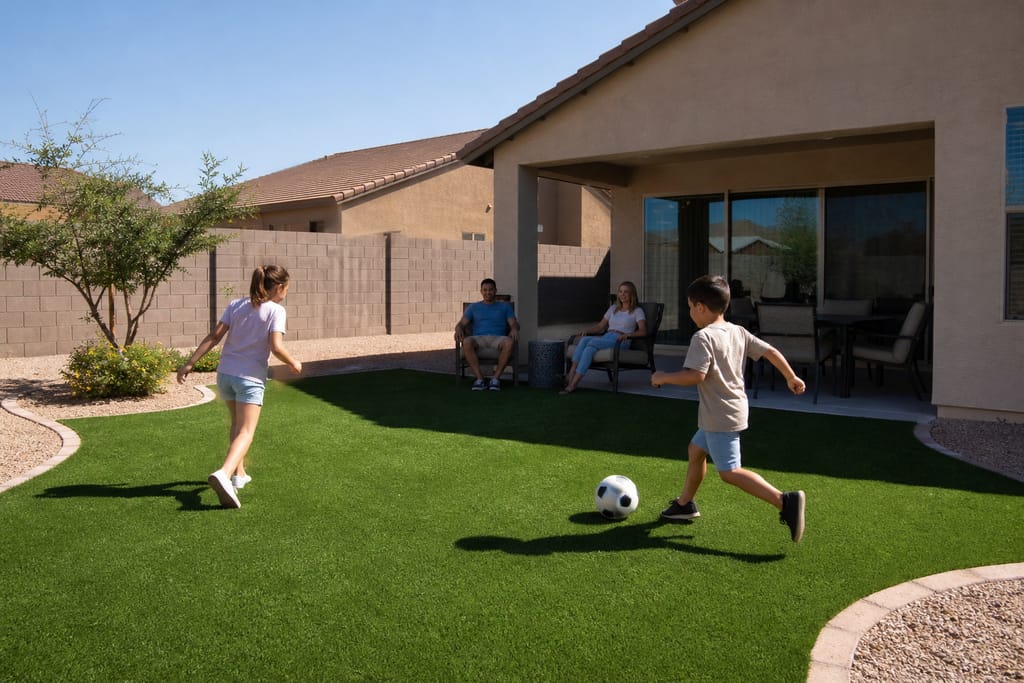 Step 5
Expansion gap allowance
Small seam gaps account for material expansion during peak summer heat.
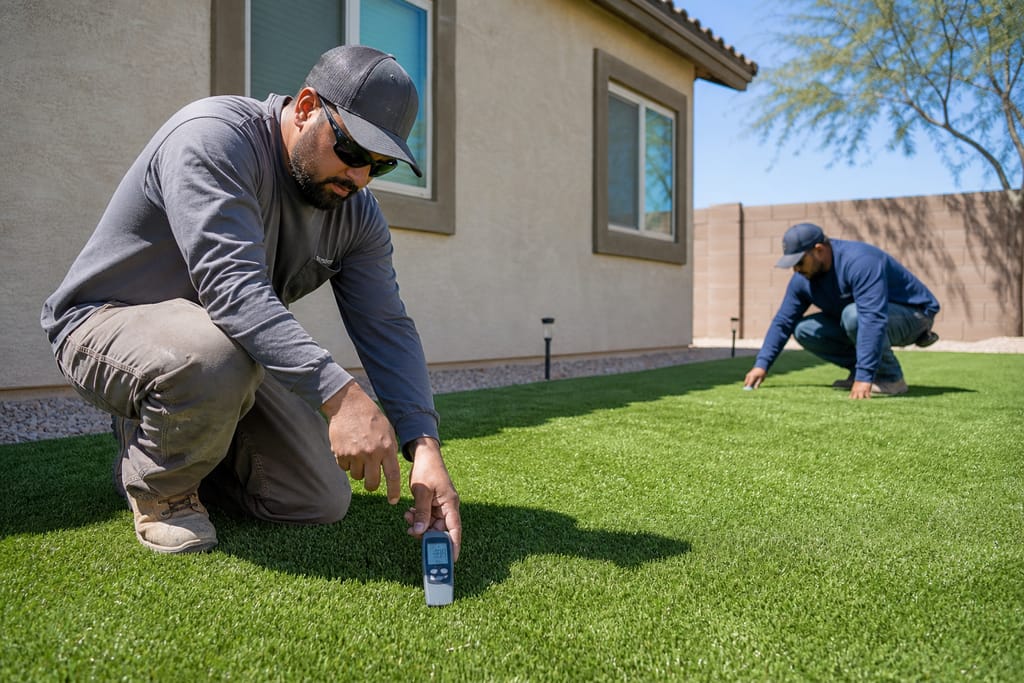 Step 6
Surface cooling check
The finished surface gets tested under direct sun before walkthrough.
Materials
Materials and Methods for Desert-Adapted Turf Installs
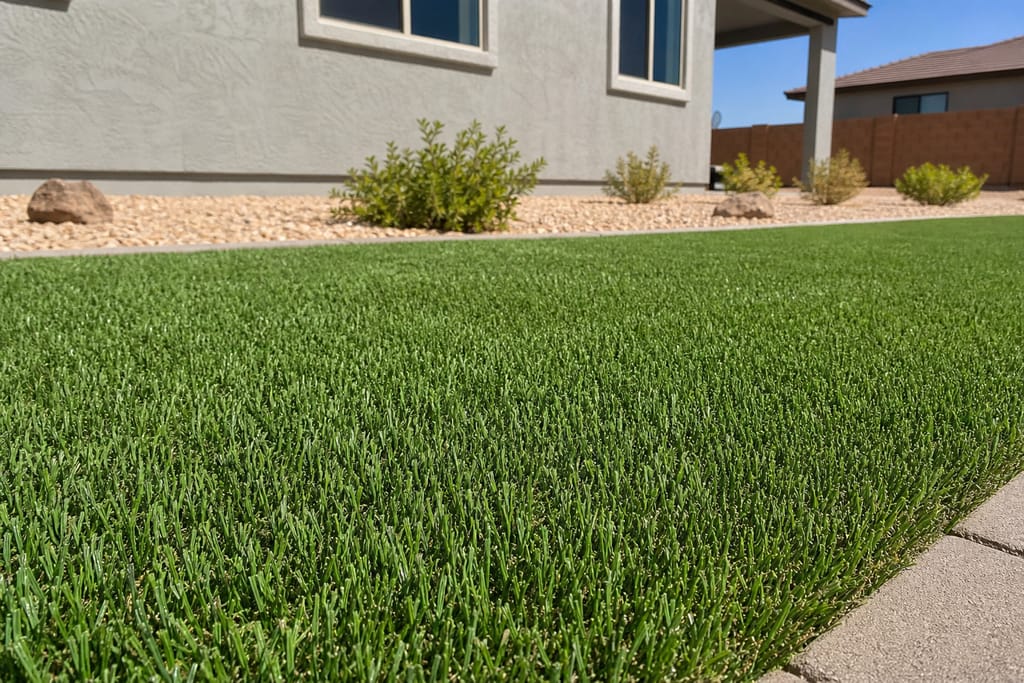
Heat-resistant turf fibers
Engineered fiber resists melting or fading through long Phoenix-area summers.
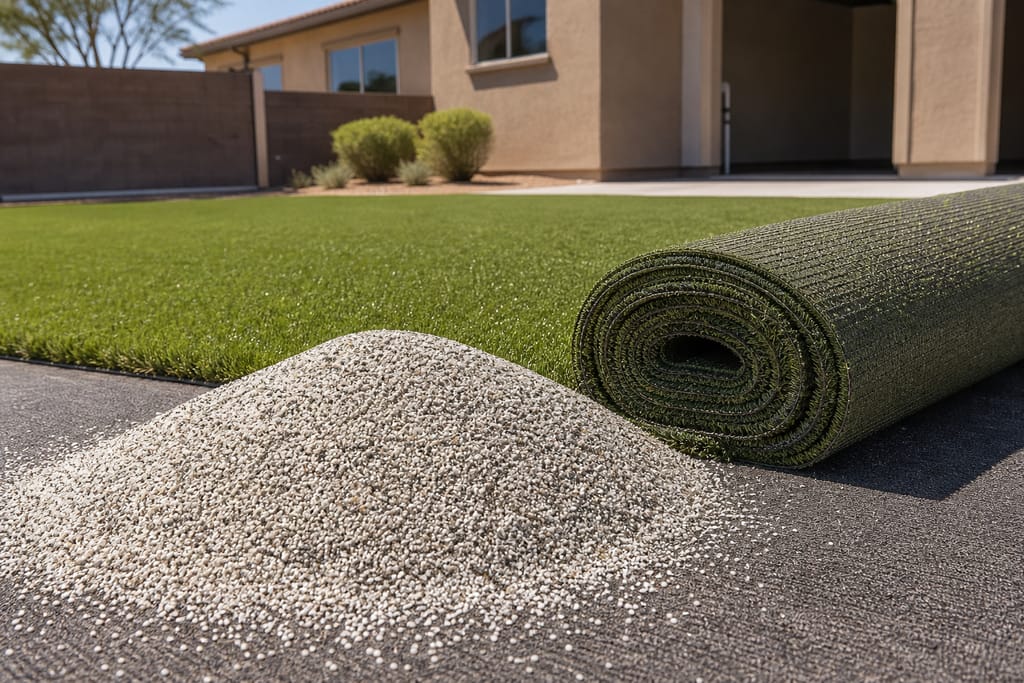
Reflective infill blend
Reflects heat to reduce surface temperature on fully exposed estate lots.
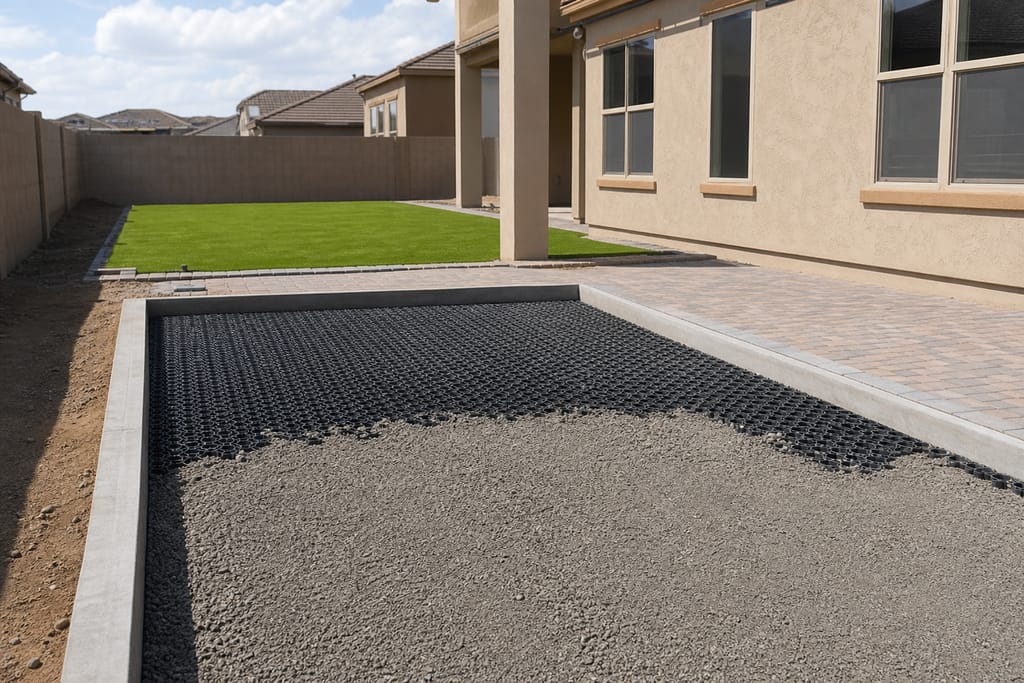
Drought-tolerant base layer
Stable even in the dry, low-moisture soil typical under Paradise Valley yards.
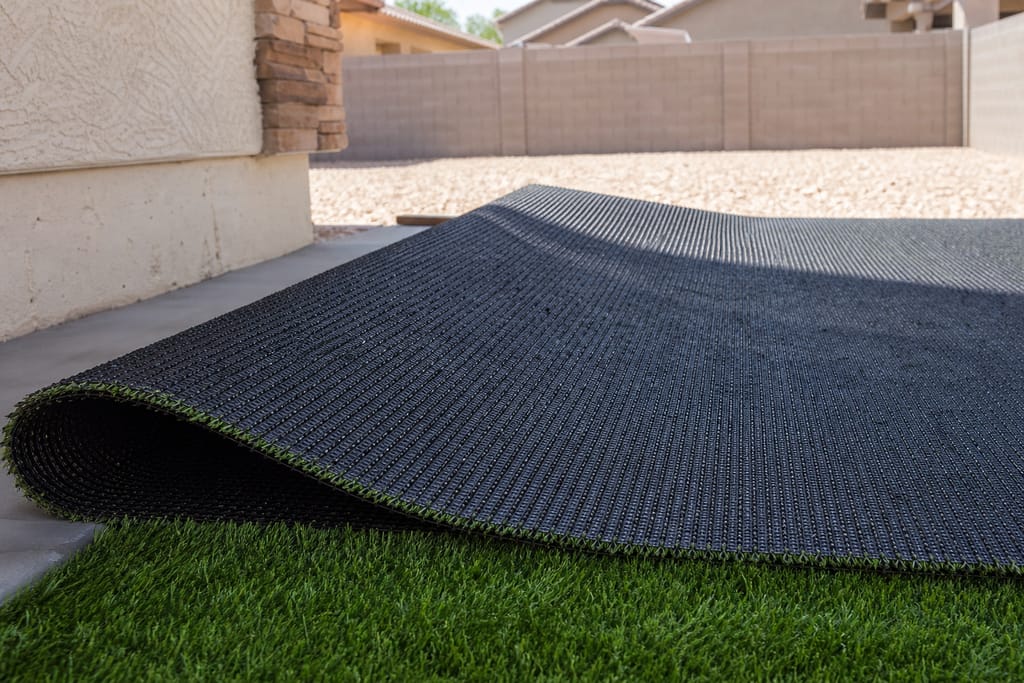
UV-protected backing
Treated backing resists cracking under months of direct desert sun.
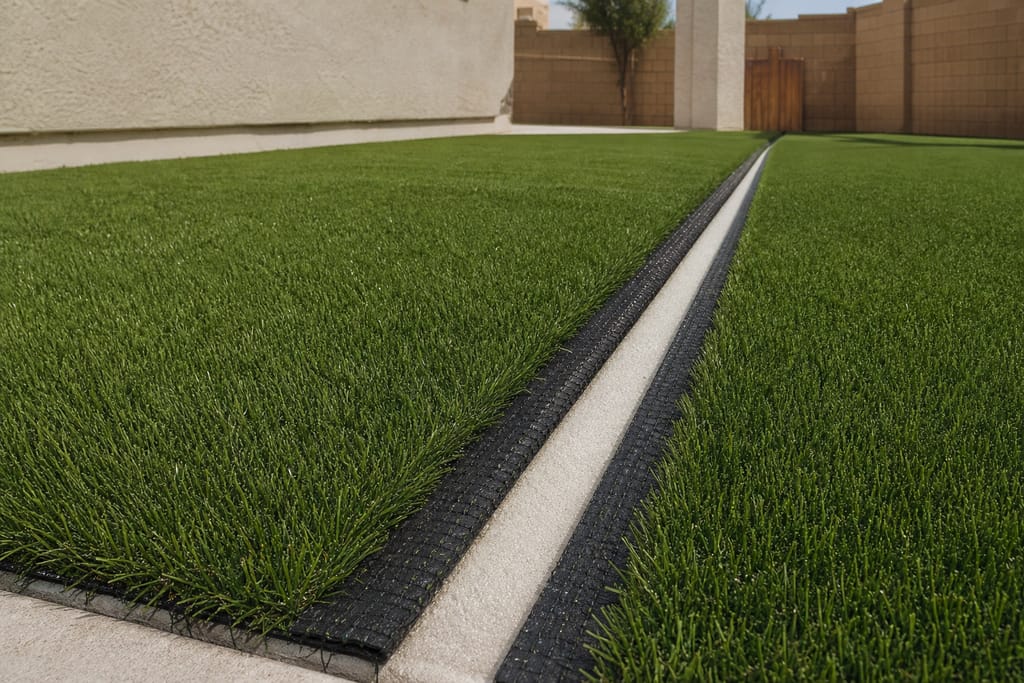
Thermal break seams
Seaming technique built to handle fiber expansion in extreme heat.
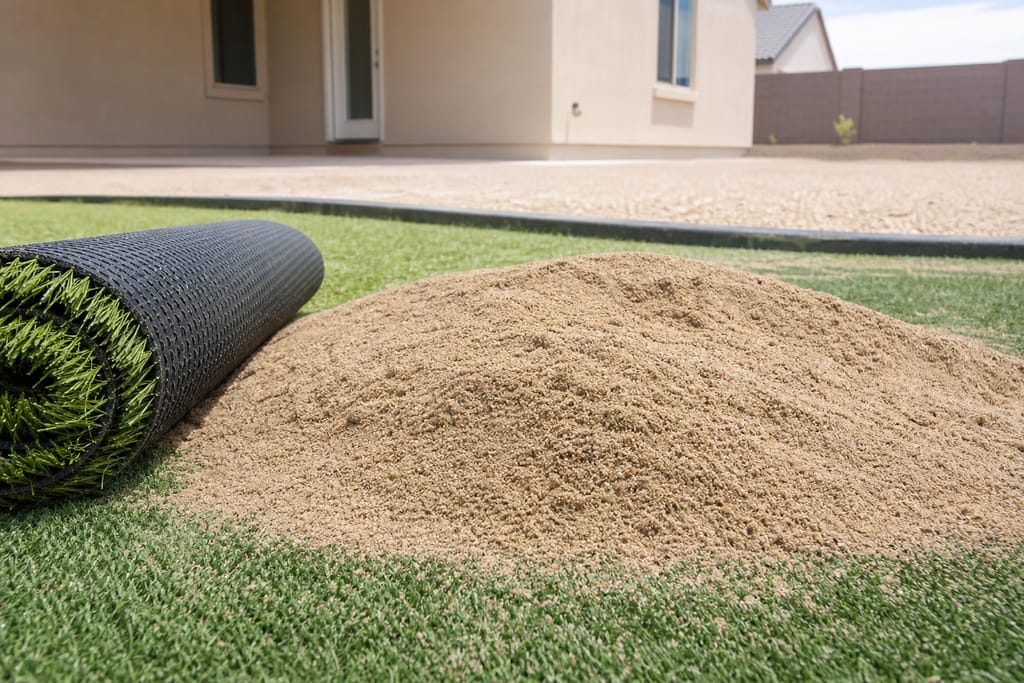
Sand-based filler
Balances stability with heat dissipation across open, sun-exposed yards.
Questions on materials?
Get a Free EstimateTimeline
How Long Does a Desert-Adapted Turf Install Take?
Timing matches a standard install since this is a materials choice, not a different build type.
- 01
Consult and material selection
same dayheat-rated options get discussed.
- 02
Base prep
1–2 dayssame as a standard installation.
- 03
Turf install and infill
1–3 daysdepending on yard size.
- 04
Surface check and walkthrough
same day
Need a schedule that fits?
Get a Free EstimateBefore & after
Before and After Desert-Adapted Turf Installs
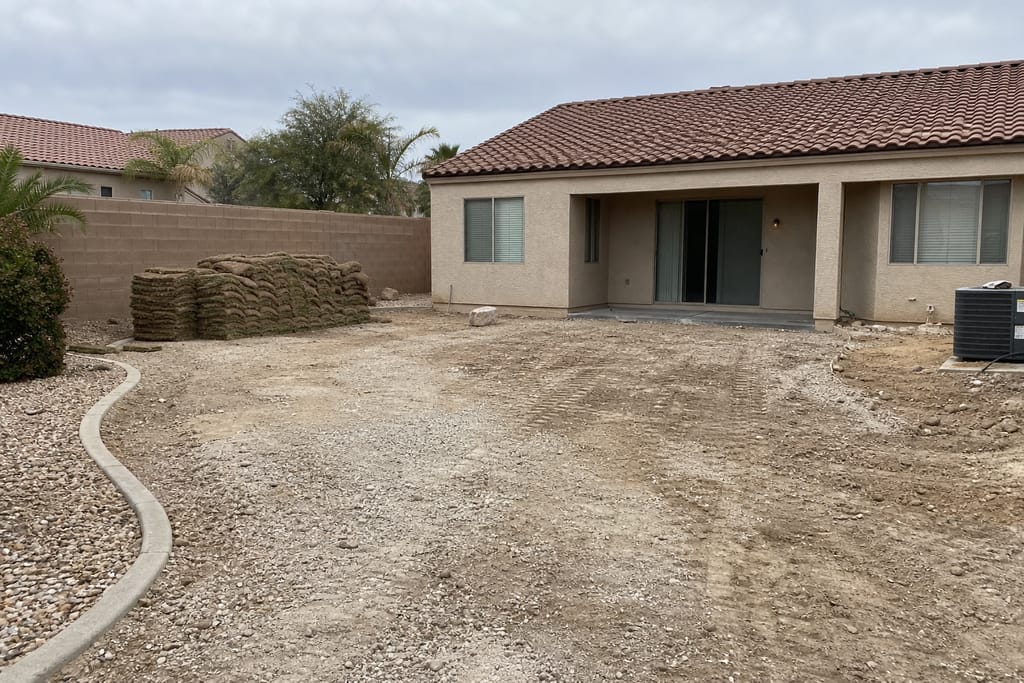
Before 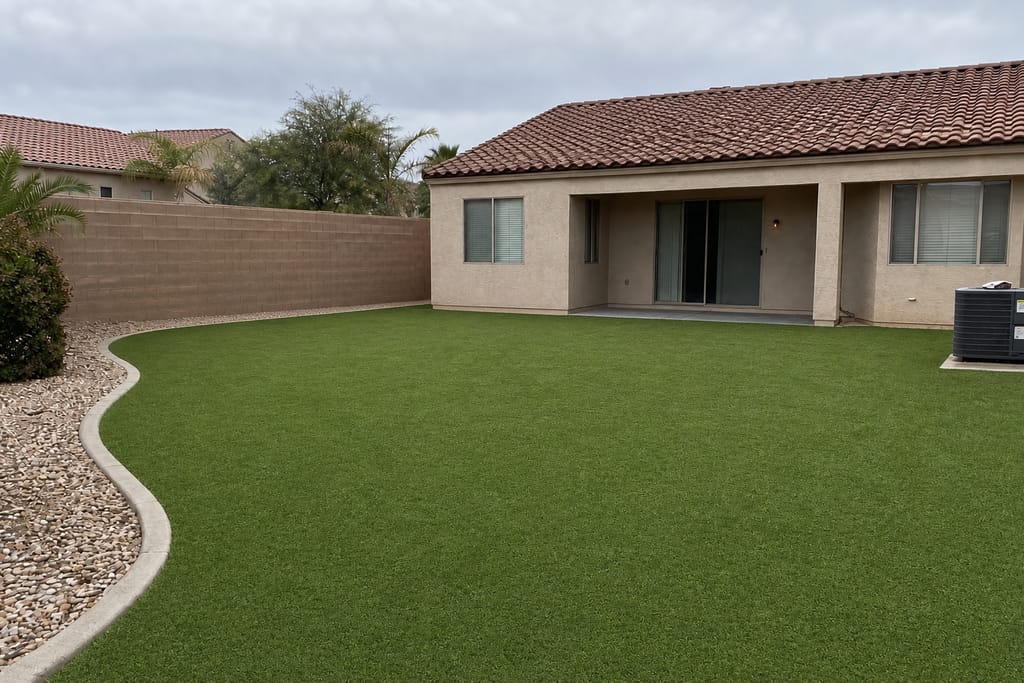
After
FAQs
Desert-Adapted Turf Installs FAQs
What infill works best for desert heat, silica sand or zeolite?
Zeolite and cooling infill options outperform standard silica sand for surface temperature, especially on fully sun-exposed lots. Silica sand still works fine in partially shaded zones where heat buildup is less of a concern.
Does artificial turf get too hot to walk on in Phoenix-area summers?
Standard turf can get uncomfortably hot in direct July sun, similar to pavement. Heat-rated fiber and cooling infill reduce that significantly, though no outdoor surface stays cool during peak afternoon heat.
Does upgrading to heat-rated materials cost more?
Cooling infill and heat-rated fiber run higher than standard turf materials, but the price difference is usually modest compared to the total install cost.
Can I mix standard and heat-rated turf in the same yard?
Shaded areas can use standard materials while sun-exposed zones get the heat-rated upgrade. This keeps costs down without sacrificing comfort where it matters most.
Will desert-adapted turf still fade over time?
UV-protected backing and heat-rated fiber slow fading considerably, but all outdoor turf eventually shows some color change after many years of direct sun.
Next step
Get a Desert-Adapted Turf Install Estimate in Paradise Valley
Call Paradise Valley Artificial Turf Pros at +1 (928) 543-2810 for a free estimate on heat-managed turf options. Home | Contact | Artificial Turf Installation
More services
Other Artificial Turf services
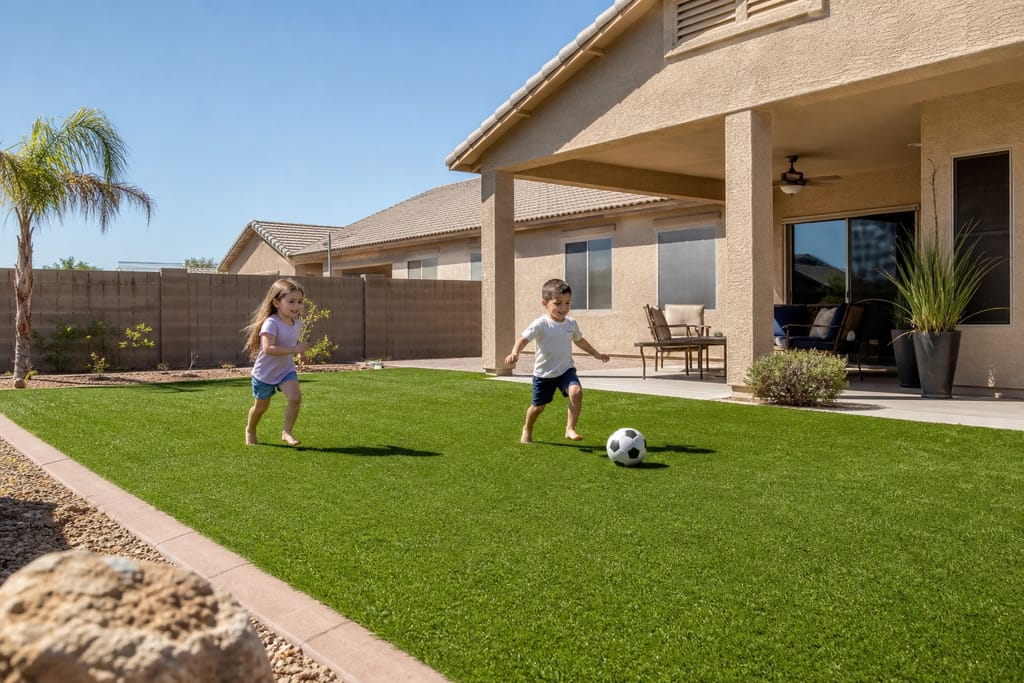
Artificial Turf Installation
Artificial turf installation in Paradise Valley, AZ with caliche-aware base prep, natural-look fiber, and free estimates.
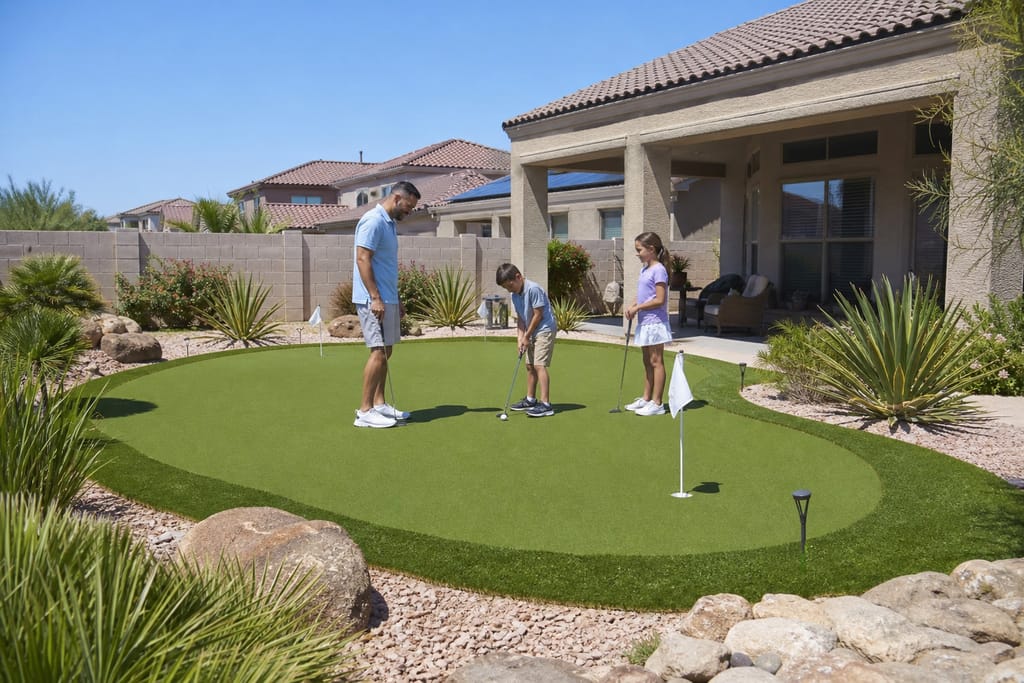
Putting Green Installation
Luxury putting green installation in Paradise Valley, AZ with custom break design, realistic roll, and free estimates.
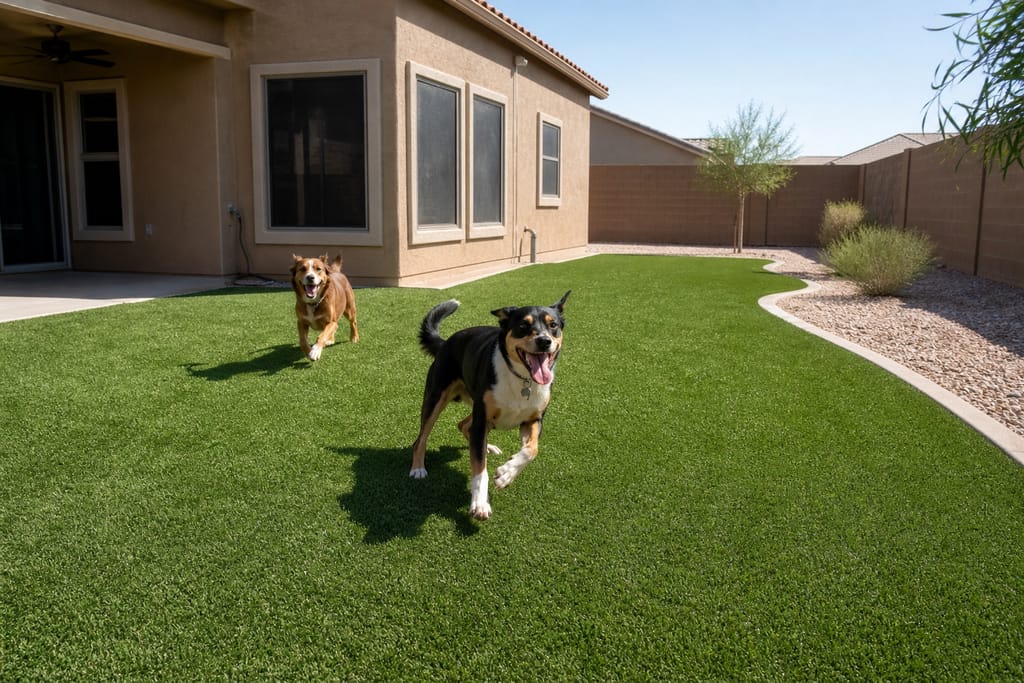
Pet Turf Installation
Pet turf installation in Paradise Valley, AZ with drainage-first base and odor-control infill. Free estimates.
Ask about Desert-Adapted Turf Installs
Tell us about the project and how to reach you.